In the modern construction landscape, ensuring the structural integrity of masonry walls is paramount for long-term safety and durability. The implementation of brick horizontal joint reinforcement serves as a critical engineering solution, designed to mitigate the risks of cracking and structural failure caused by thermal expansion, shrinkage, and seismic activity. By integrating high-tensile steel components into the mortar joints, builders can significantly enhance the lateral strength of a wall, transforming a simple stack of bricks into a cohesive, resilient structure.
Globally, the demand for reinforced masonry has surged as urban centers push for taller and more complex architectural designs. The use of brick horizontal joint reinforcement is no longer just an optional upgrade but a standard requirement in many international building codes to ensure that residential and commercial properties can withstand environmental stressors. This technological approach addresses the inherent weakness of masonry—its low tensile strength—by providing a mechanical bond that distributes loads more evenly across the facade.
Understanding the nuances of these reinforcement systems allows developers and architects to optimize material usage while maximizing safety. Whether it is through the use of stainless steel ladders, trusses, or twisted wires, the strategic placement of brick horizontal joint reinforcement prevents the propagation of vertical cracks and reduces the likelihood of wall collapse during catastrophic events. This guide explores the technical dimensions, global applications, and future innovations of this essential construction accessory.
Global Industry Context of Brick Horizontal Joint Reinforcement
The global construction industry is currently facing a dual challenge: the need for rapid urbanization and the necessity of increasing building longevity. According to ISO standards and various international building codes, the structural failure of masonry walls often stems from a lack of internal cohesion. brick horizontal joint reinforcement has emerged as the primary solution to this problem, providing the necessary tensile support that mortar alone cannot provide. In regions prone to seismic activity or extreme temperature fluctuations, these reinforcements are critical for preventing sudden structural failures.
From the high-rise developments in Southeast Asia to the historic preservation projects in Europe, the integration of steel reinforcement within brickwork has become a global benchmark. The shift toward sustainable, long-lasting materials means that the industry is moving away from temporary fixes toward integrated systems. By utilizing brick horizontal joint reinforcement, the construction sector is reducing the frequency of costly repairs and enhancing the overall safety of the built environment.
Defining Brick Horizontal Joint Reinforcement and Its Purpose
In simple technical terms, brick horizontal joint reinforcement consists of thin, high-strength steel strips, wires, or ladder-like structures placed horizontally within the mortar beds of a brick wall. Unlike vertical reinforcement, which typically involves steel bars in grouted cells, horizontal reinforcement acts as a "belt" that wraps around the wall's width, binding the bricks together and preventing them from pulling apart under stress.
The primary purpose of this system is to control cracking. Masonry is naturally strong in compression but weak in tension. When a building settles or undergoes thermal expansion, tensile stresses develop. Without brick horizontal joint reinforcement, these stresses result in unsightly and dangerous cracks. The reinforcement absorbs these forces, redistributing the load across a larger area of the wall and maintaining the architectural integrity of the facade.
Beyond structural safety, this technology serves humanitarian and economic needs by lowering the risk of collapse in low-cost housing projects in developing nations. By employing standardized brick horizontal joint reinforcement, engineers can ensure a baseline of safety in areas where professional oversight may be limited, making it a vital tool for global infrastructure resilience.
Core Components Affecting Reinforcement Performance
The effectiveness of brick horizontal joint reinforcement depends heavily on the material composition of the reinforcement itself. Stainless steel is the gold standard due to its exceptional corrosion resistance, ensuring that the internal "skeleton" of the wall does not rust and expand, which would otherwise cause the brickwork to spall or crack from the inside out.
Durability and chemical compatibility are also essential. The reinforcement must be compatible with the pH levels of the mortar. Low-quality galvanized steel may react with certain cement types, leading to premature degradation. Therefore, high-grade brick horizontal joint reinforcement is engineered to remain inert and stable for the entire lifecycle of the building, often exceeding 50 to 100 years of service.
Furthermore, the geometry of the reinforcement—whether it is a flat strip, a twisted wire, or a truss—determines how it bonds with the mortar. A truss-style brick horizontal joint reinforcement provides superior mechanical interlocking, preventing the reinforcement from sliding within the joint and ensuring that the tensile strength is fully utilized during a structural event.
Comparative Analysis of Reinforcement Methods
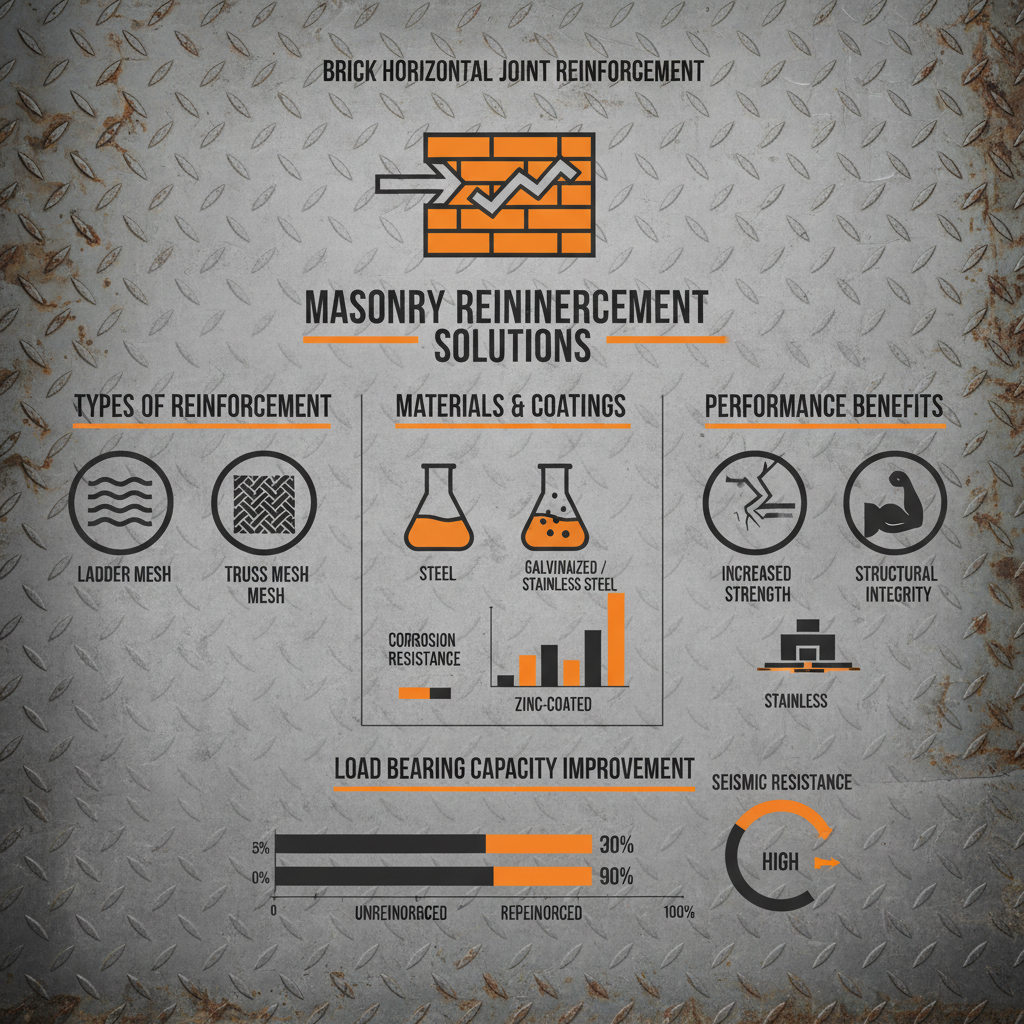
Choosing the right type of brick horizontal joint reinforcement requires a balance between cost, installation speed, and the specific load requirements of the project. For instance, simple wire mesh is often sufficient for residential garden walls, whereas complex ladder-type reinforcements are mandatory for load-bearing commercial facades. Each method offers a different level of "bond strength" and "crack control."
To better understand the performance metrics, we compare common reinforcement styles across key indicators such as corrosion resistance, tensile capacity, and ease of installation. While high-end stainless options are more expensive, their long-term value outweighs the initial cost by eliminating future maintenance.
Efficiency Ratings of Different Brick Horizontal Joint Reinforcement Types
Global Applications and Real-World Use Cases
The practical application of brick horizontal joint reinforcement varies significantly by region. In North America, it is extensively used in veneer masonry to tie the brick skin to the inner structural wall, preventing the "bowing" effect common in older buildings. In Europe, where heritage brickwork is prevalent, specialized reinforcements are used in restoration projects to stabilize historic walls without altering their external aesthetic.
In more extreme environments, such as coastal industrial zones, the use of high-grade brick horizontal joint reinforcement is non-negotiable. The salty air accelerates the corrosion of standard steel, making stainless steel reinforcement the only viable option to prevent structural collapse. Similarly, in post-disaster reconstruction in seismic zones, these reinforcements provide the ductility needed for walls to sway slightly without crumbling, saving countless lives.
Long-Term Value and Sustainability Benefits
Investing in high-quality brick horizontal joint reinforcement provides a tangible return on investment by extending the lifecycle of the building. When a wall is properly reinforced, the need for structural underpinning or expensive crack injection is drastically reduced. This not only saves money for the property owner but also reduces the environmental impact associated with demolition and reconstruction.
From a sustainability perspective, reinforced masonry supports the "build once, build right" philosophy. By preventing failure, we reduce the demand for new bricks and cement—industries that are major contributors to global CO2 emissions. brick horizontal joint reinforcement allows for thinner, more efficient wall designs that do not compromise on strength, optimizing the use of raw materials.
Beyond the numbers, there is an emotional value tied to the safety and dignity of a secure home. Knowing that a structure is engineered with the best brick horizontal joint reinforcement provides peace of mind to residents and trust for the architects. It is a hidden investment that manifests as lifelong stability and architectural reliability.
Future Trends in Masonry Reinforcement Technology
The future of brick horizontal joint reinforcement is leaning heavily toward "smart materials" and automation. We are seeing the emergence of carbon-fiber reinforced polymers (CFRP) that offer strength-to-weight ratios far superior to steel, while being completely immune to corrosion. These advanced materials are expected to become more affordable, expanding their use from high-end industrial projects to mainstream residential construction.
Digital transformation is also playing a role. BIM (Building Information Modeling) now allows engineers to simulate the exact stress points of a wall, enabling the "precision placement" of brick horizontal joint reinforcement. Instead of placing reinforcement every second course uniformly, developers can place it exactly where the stresses are highest, reducing material waste and labor costs.
Furthermore, the rise of automated bricklaying robots is changing how reinforcements are installed. These robots can place brick horizontal joint reinforcement with millimeter precision, ensuring that the steel is perfectly centered in the mortar joint—a common point of failure in manual installation.
Technical Comparison of Reinforcement Materials for Future Applications
| Material Type |
Corrosion Resistance |
Tensile Strength |
Cost-Efficiency |
| Stainless Steel 304 |
High |
Very High |
Medium |
| Galvanized Steel |
Medium |
High |
High |
| Carbon Fiber (CFRP) |
Excellent |
Extreme |
Low |
| Basalt Fiber |
High |
Medium-High |
Medium |
| Epoxy Coated Steel |
Medium-High |
High |
Medium |
| Cold-Rolled Iron |
Low |
Medium |
Very High |
FAQS
Typically, reinforcement is placed every 2 to 4 courses of brickwork, depending on the wall's height and the specific building code. For load-bearing walls or those in high-wind areas, a denser placement (e.g., every 2 courses) is recommended to maximize stability. Always consult the structural engineer's blueprints for precise spacing requirements.
Yes, galvanized steel is common and cost-effective for many inland projects. However, in coastal areas or environments with high moisture and salt exposure, stainless steel is strongly preferred. Galvanized coatings can eventually break down, leading to rust and "oxide jacking," which can actually push the bricks apart and cause cracking.
While it cannot stop foundation failure or extreme seismic shifts, it significantly reduces "shrinkage" and "thermal" cracks. It transforms a brittle wall into a more ductile one, meaning that if a crack does occur, it will be smaller, narrower, and less likely to compromise the overall structural safety of the building.
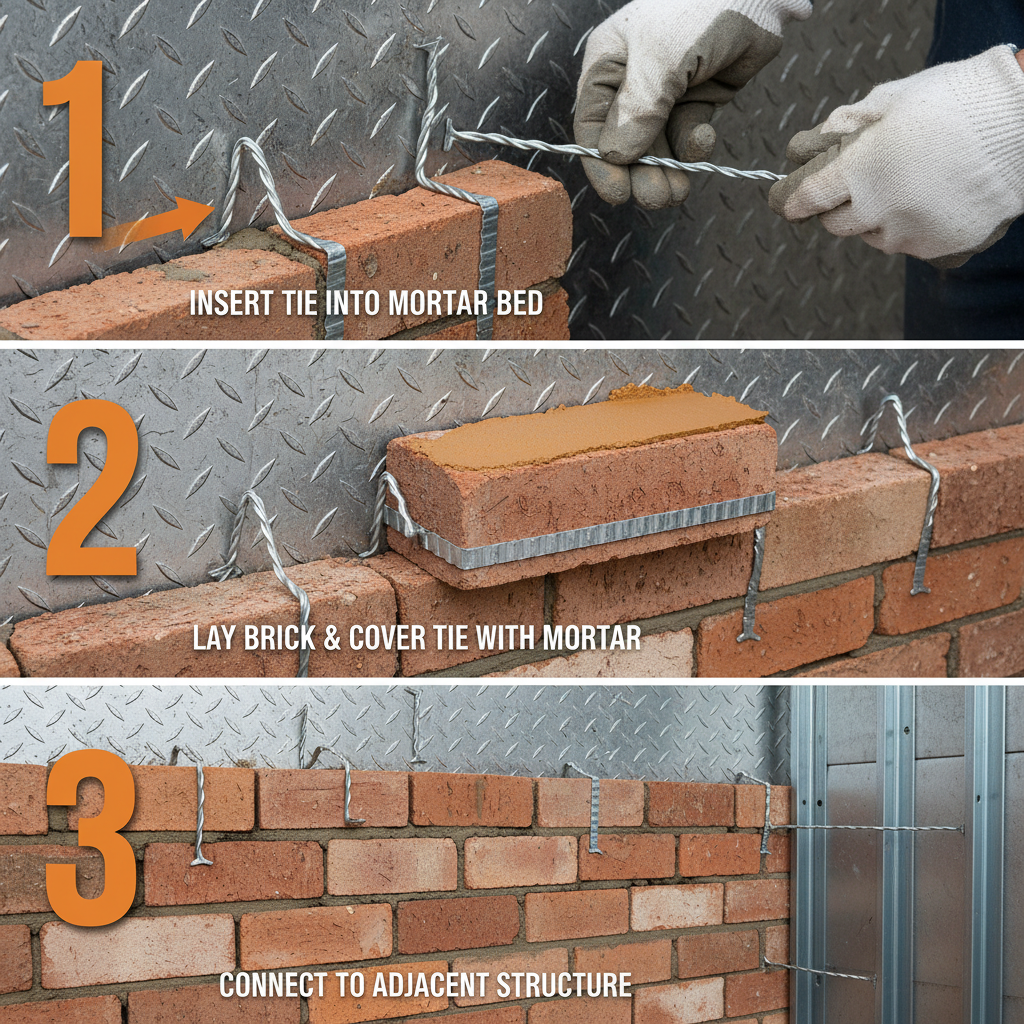
The process involves laying a bed of mortar, placing the brick horizontal joint reinforcement on top of the mortar, and then pressing the next course of bricks into the reinforcement. It is vital to ensure the steel is fully embedded in the mortar to prevent air pockets and ensure a complete mechanical bond.
For very low walls, it may not be structurally mandatory, but it is still highly recommended. Garden walls are often subject to soil pressure and freeze-thaw cycles. Adding horizontal reinforcement prevents the wall from leaning or splitting over time, saving you from having to rebuild the wall every few years.
The gauge is determined by the required tensile strength. Thicker gauges provide more support but can be harder to embed without creating voids in the mortar. Most standard masonry projects use a balanced gauge that provides sufficient strength while remaining thin enough to be completely covered by the mortar bed.
Conclusion
In summary, brick horizontal joint reinforcement is a fundamental component of modern masonry, bridging the gap between traditional aesthetics and contemporary engineering standards. By addressing the inherent tensile weaknesses of brick and mortar, these systems provide a critical layer of protection against environmental stress, seismic activity, and structural settling. From the selection of corrosion-resistant stainless steel to the strategic implementation of ladder-style trusses, the right reinforcement strategy ensures that buildings remain safe, sustainable, and visually intact for generations.
Looking ahead, the integration of composite materials and BIM-driven placement will further refine the efficiency of masonry construction. For architects, developers, and contractors, the shift toward higher-grade reinforcement is not merely a matter of compliance, but a commitment to quality and longevity. To ensure your next project meets the highest standards of structural integrity, we invite you to explore our professional-grade solutions. Visit our website: www.cntcmetal.com