- Mobile Phone
- +8613931874955
- sales@cntcmetal.com
Selecting the right fastening materials often determines the structural integrity of a construction project, yet many procurement officers overlook the nuance between basic wire products and specialized annealed options. The choice of a black annealed wire manufacturer is not merely a transaction of commodity steel but a decision on how a structure will handle tension and stress over time.
In the broader context of metal product manufacturing, annealing is the critical thermal process that transforms hard, brittle wire into a ductile material capable of being bent and twisted without snapping. This versatility is essential for everything from rebar tying in reinforced concrete to the precision winding of industrial springs and fasteners.
This analysis explores the technical parameters of annealed wire, its role in modern masonry and industrial applications, and the criteria for evaluating suppliers to ensure consistency in material grade and tensile strength.


Annealing is a heat treatment process that alters the microstructure of the steel. By heating the wire to a specific temperature and then cooling it slowly, the internal stresses created during the cold-drawing process are relieved. This results in a softer, more pliable wire that can be manipulated manually or by machinery without causing stress fractures.
For a professional black annealed wire manufacturer, controlling the cooling rate is the most critical variable. If the wire cools too quickly, it retains too much hardness; if too slowly, it may lose the tensile strength required for load-bearing applications. This balance is what distinguishes industrial-grade wire from generic hardware store alternatives.
The performance of annealed wire is measured through a combination of tensile strength, elongation percentages, and diameter consistency. In high-load construction environments, the wire must possess enough yield strength to hold rebar in place while maintaining sufficient elongation to prevent snapping during the concrete pouring process.
Different grades of low-carbon steel are typically used. The carbon content must be kept low to ensure that the annealing process effectively reduces the hardness. Variation in wire diameter, even by a fraction of a millimeter, can significantly impact the stability of wire-formed products like coil springs or mesh fasteners.
Quality assurance involves rigorous testing of the "softness" or the bend-test capacity. This ensures that when the wire is used in complex bending products, it does not develop micro-cracks that could lead to premature structural failure under environmental stress.
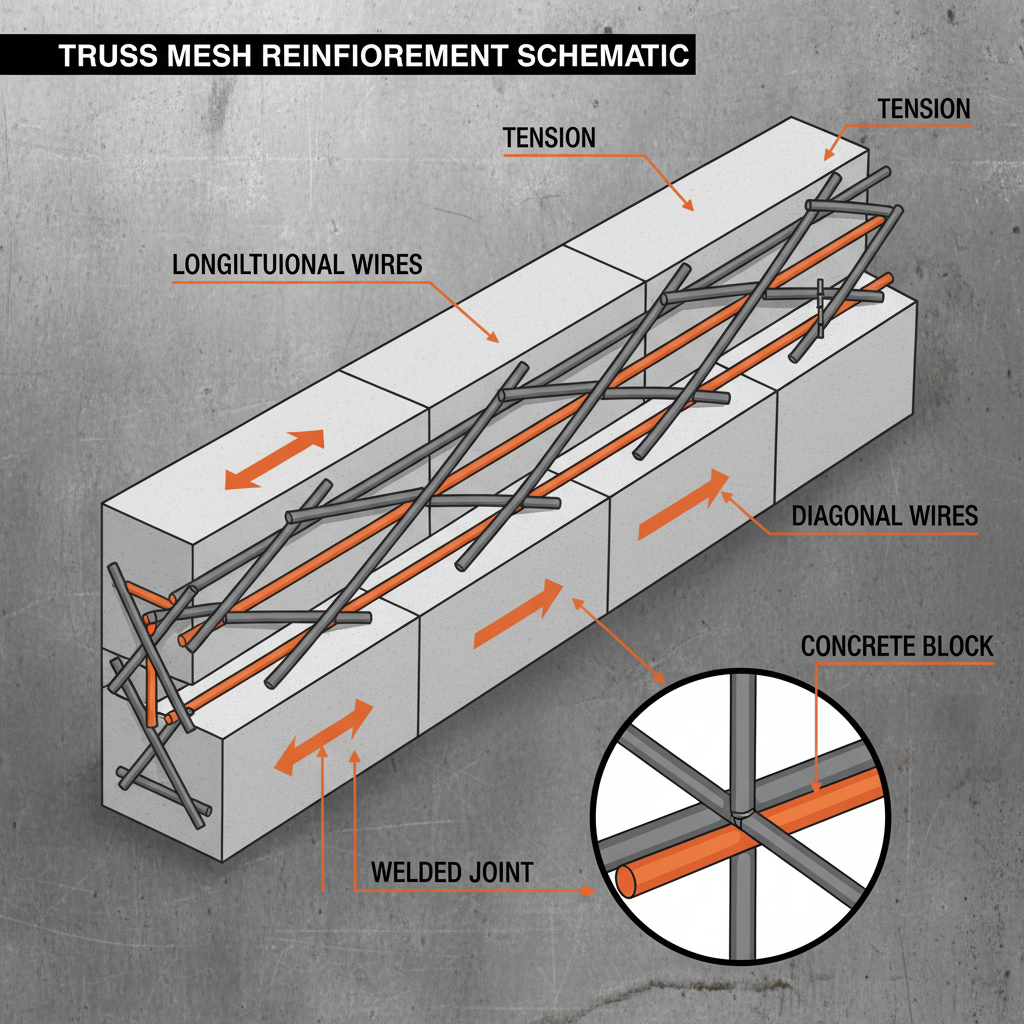
In concrete and masonry construction, the role of wire products extends beyond simple binding. Specialized components like wall ties and panel anchors rely on the foundational properties of wire drawing and forming to secure cladding to inner panels.
The efficacy of load-bearing anchors, such as V-shaped stainless steel anchors, depends on the material's ability to distribute vertical dead loads and resist horizontal wind pressures without compromising the concrete matrix.
For instance, using AISI316 or 304 stainless steel wire for anchors ensures that the connection between facing layers and inner panels remains corrosion-resistant. The bent ends of these anchors provide a mechanical lock within the concrete, a design that mirrors the logic of annealed wire binding—creating a secure, non-slip interface.
Different wire products require different balances of ductility and strength. While black annealed wire is prized for its flexibility in tying, products like storage cages or wire mesh require a higher tensile threshold to maintain their shape under load.
Evaluating these products requires a relative index that considers the operational environment. For example, a sign stake requires high rigidity to penetrate soil, whereas a coil spring requires a precise elastic modulus to return to its original shape after compression.
In large-scale commercial developments, the integration of wire-based accessories must be standardized to ensure quality across thousands of installation points. The use of standardized V-shaped anchors for sandwich panels is a prime example of how precision wire bending reduces labor costs and installation errors.
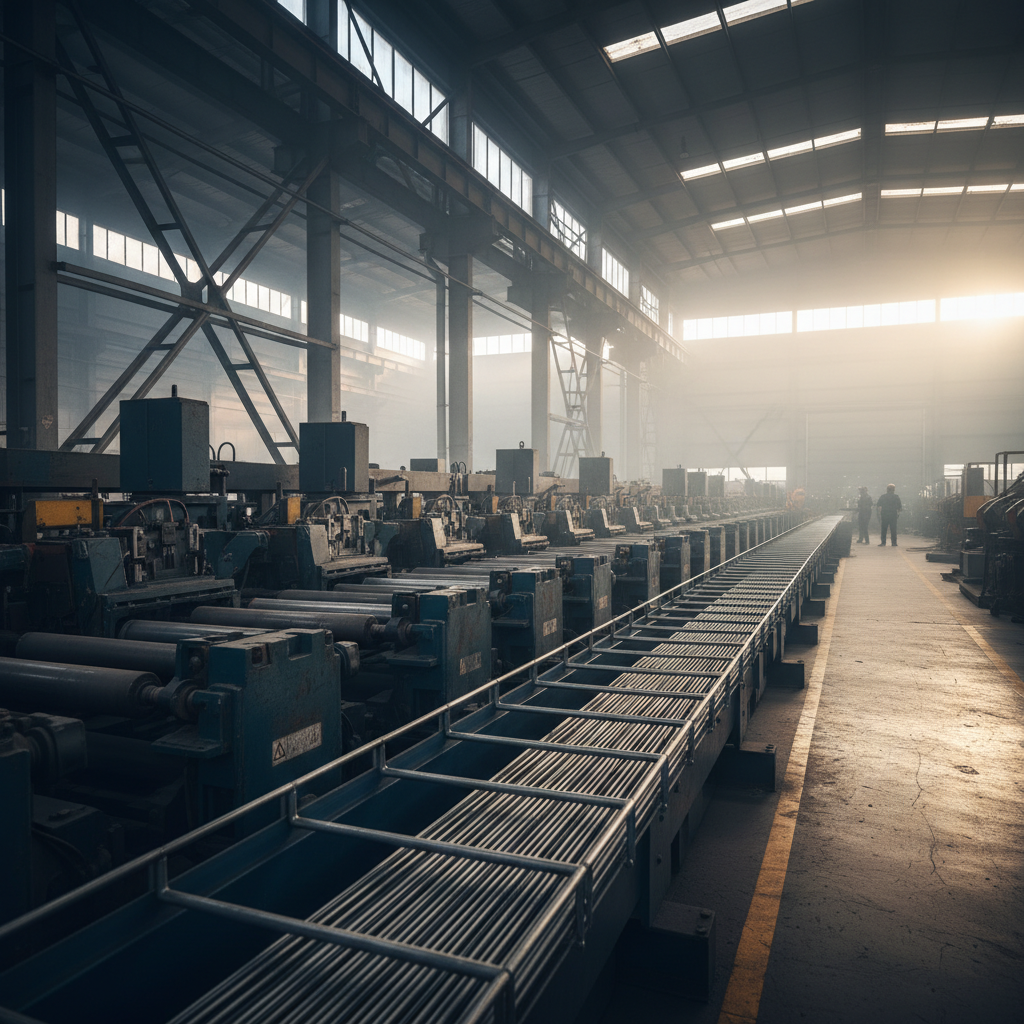
By utilizing components from a manufacturer with advanced equipment—such as those imported from Germany or Korea—projects can achieve higher consistency in wire diameters (e.g., 5mm to 10mm), ensuring that every anchor can withstand the calculated dead loads and wind pressures of a building's envelope.
The shift from manual bending to CNC wire forming has revolutionized the production of fasteners and construction accessories. Automated systems allow for complex shapes, such as the specific bends in sandwich panel anchors, to be repeated with micron-level accuracy, which is impossible with manual labor.
Furthermore, the integration of high-grade stainless steel (AISI316) into these automated processes has expanded the lifespan of structural connections in coastal or high-humidity environments. This technological leap reduces the need for frequent maintenance and increases the overall safety of the facade.
As industry standards evolve, there is a growing trend toward "system-based" procurement, where a single manufacturer provides a comprehensive suite of wire products—from the initial binding wire to the final structural anchors—ensuring material compatibility across the entire project.
When vetting a black annealed wire manufacturer, procurement teams should look beyond the unit price. The true cost of ownership is reflected in the wire's failure rate during installation and its longevity in the field.
Key evaluation markers include the manufacturer's equipment origin, their quality management system, and their ability to provide certified material grades. A supplier that utilizes advanced imported machinery is more likely to deliver the consistent diameter and tensile strength required for safety-critical applications.
The following framework provides a relative comparison of wire product selections based on typical project requirements, helping engineers balance cost and performance.
| Requirement | Black Annealed | Galvanized Wire | Stainless Steel | Spring Steel |
|---|---|---|---|---|
| Ductility/Bending | Excellent | Moderate | High | Low |
| Corrosion Resistance | Low | Moderate | Excellent | Low |
| Tensile Strength | Low-Medium | Medium | High | Very High |
| Cost Efficiency | Very High | High | Moderate | Moderate |
| Main Application | Rebar Tying | Fencing/Mesh | Structural Anchors | Industrial Springs |
| Lifespan in Humidity | Short | Medium | Long | Short |
The primary difference lies in the surface treatment and flexibility. Black annealed wire is heat-treated to increase ductility and has a dark oxide scale, making it ideal for manual tying where bending is frequent. Galvanized wire is coated in zinc to prevent rust, offering superior corrosion resistance but generally being stiffer and less pliable than its annealed counterpart.
The diameter (typically ranging from 5mm to 10mm) should be selected based on the calculated vertical dead loads of the facing layer and potential horizontal loads from wind and temperature deformation. Engineers must refer to the structural load-bearing requirements of the specific panel thickness and the strength of the concrete matrix to ensure the anchor does not shear or pull out.
AISI 316 stainless steel contains molybdenum, which provides significantly higher resistance to chlorides and industrial pollutants compared to AISI 304 or carbon steel. In facade construction, where anchors are embedded in concrete and exposed to varying thermal cycles, this prevents pitting corrosion and ensures the long-term stability of the cladding.
Generally, no. Black annealed wire is intended for temporary binding or non-critical fastening. Because it lacks a protective coating, it is susceptible to oxidation (rust) over time. For permanent structural connections, galvanized or stainless steel wires are required to maintain integrity against environmental degradation.
Low-quality annealing is often indicated by "brittleness" during bending, where the wire snaps or develops visible cracks at the bend point. Additionally, inconsistent surface color or significant variation in diameter across a single coil suggests poor temperature control and unstable drawing processes during manufacturing.
While larger diameters (10mm) provide higher load capacity, they require more force to embed and can be more difficult to align precisely. Selecting the minimum diameter that safely meets the engineering load requirements typically improves installation efficiency and reduces the risk of cracking the surrounding concrete during insertion.
The technical superiority of a construction project often rests on the smallest components. Whether it is the ductility provided by a professional black annealed wire manufacturer for rebar tying or the corrosion resistance of AISI316 anchors in a sandwich wall, material science remains the foundation of safety.
By focusing on the relationship between metallurgical properties—such as tensile strength and elongation—and practical application scenarios, engineers can optimize both cost and longevity. As wire forming technologies continue to advance, the shift toward high-precision, automated production will further elevate the standards of structural integrity in the global construction market.